
Roof Repair in Mobile County, Alabama
Roof repair across all of Mobile County, Alabama — Theodore, Semmes, Saraland, Chickasaw, Satsuma, Tillmans Corner, Prichard, Eight Mile, Grand Bay, and Citronelle. Wherever you are in the county, we find the leak source first and fix the actual failure — not the stain on your ceiling. Call (251) 278-3357 to schedule a diagnostic.
- Same-Day Emergency Response
- Insurance Documentation Support
- Licensed & Insured in Alabama
- Serving Mobile & Baldwin County Since 2018
We find the leak source before we touch a shingle
The wet spot on your ceiling almost never sits under the actual leak. Water enters at a failure point on the roof, then follows the deck, rafters, and framing downhill before it drips inside — that path is called water migration, and chasing the interior stain instead of the entry point is why so many repairs fail twice.
Our diagnostic opening starts on the roof, not in the attic. We trace the water back uphill to its origin, then confirm it with a controlled water test — isolating one area at a time until the drip reappears, so we prove the leak source instead of guessing at it.
Moisture mapping tells us how far the damage really spread. A slow leak can soak the deck and wet insulation feet away from the visible drip, and finding that hidden saturation now is what separates a lasting repair from a recurring failure path we would only see again after the next storm.
The right fix depends on your roof — sealant is the last step, not the first
Shingle roofs almost always leak at the details, not the field. A flashing failure at a wall, chimney, or skylight, a cracked pipe boot, a missing or creased shingle, or a reverse lap in a valley — these are the usual culprits, and the real repair is shingle-fashion flashing woven back into the courses or a counterflashing reglet cut and sealed, not a smear over the top.
Metal roofs leak where the system moves and where fasteners let go. On rural R-panel and exposed-fastener metal we see open seams, backed-out fastener washers, and punctures; the fix is matched replacement fasteners, seam repair, and material compatibility that avoids dissimilar metals — a mismatched patch corrodes and reopens the same leak.
Low-slope and flat sections need a patch that bonds, not a bridge. On membrane we look for open seams, membrane bridging at transitions, and fishmouths, then repair with a proper cold weld or EPDM primer and seam tape and reset the termination bar — sealant is a secondary weather seal over a sound repair, never the repair itself.
Leak causes change as you move across Mobile County
The response is the same countywide, but the cause differs by location. In the rural and unincorporated stretches around Semmes, Citronelle, and Grand Bay we most often chase exposed-fastener metal — seams that opened and washers that backed out over years of thermal movement — while the leak in a mid-century Saraland or Chickasaw ranch is usually a tired shingle flashing detail.
Bay-adjacent communities corrode flashing faster. In Theodore, Grand Bay, and the low county near the water, salt air attacks metal flashing and fasteners years ahead of inland homes, so a leak there often traces to brittle, corroded counterflashing rather than the shingles around it.
Wind-driven rain finds the weak details first. A dead valley, a cricket or saddle behind a chimney, or hydrostatic pressure building where water ponds against a transition — these are the spots capillary entry exploits during a Gulf downpour, and they leak in Tillmans Corner for the same physical reasons they leak in Prichard.
Emergency dry-in when the water is coming in now
A temporary repair stops the water; a permanent repair fixes the roof. When rain is active we get you a dry-in — a controlled tarp or emergency patch that protects the interior — and we are clear that it is temporary, buying time until conditions allow the real work.
Understanding temporary versus permanent repair keeps you from paying twice. The dry-in is not the final fix, and we come back to do the permanent flashing, seam, or patch work correctly once the deck is dry and we can bond materials properly.
Call (251) 278-3357 when you have an active leak anywhere in the county. We would rather protect your home the same day and diagnose the source right than rush a permanent repair onto a wet, moving roof.
An honest read on repair versus replace
Not every leak is a reason to replace a roof. When the deck is sound, the damage is contained, and the failure is a single detail, a localized repair is the honest call — repairability comes down to how widespread the damage is, not how old the roof looks from the driveway.
Some roofs are past the point where patching makes sense. Widespread deck damage, a brittle-fracture metal panel that cracks when you walk it, or the same recurring failure path returning after multiple repairs are signs the money is better spent on replacement — and we will tell you when we see it.
We have made that call the same way since 2018. If a roof has three to five years of service life remaining and one bad valley, you get a repair; if the system is failing everywhere, you get a straight answer instead of a sale.
Warranty and what to expect
You get a diagnosis you can see, not just an invoice. We show you the leak source, explain the water migration path we traced, and walk you through the exact scope — flashing, pipe boot, seam, or patch — before any work starts.
Our repairs carry a workmanship warranty, and we are licensed and insured. As a Gulf Coast roofer built around Mobile and Baldwin County service, we cover the county without physical locations to visit — we come to you, from Saraland to Grand Bay.
If a storm is involved, we help you document it honestly. Alabama programs like FORTIFIED and the Strengthen Alabama Homes grant (up to $10,000, roof only) may apply to a qualifying replacement — we will point you to your carrier to verify eligibility rather than promise a number we cannot guarantee.
Targeted Roof Repair for Mobile County's Climate
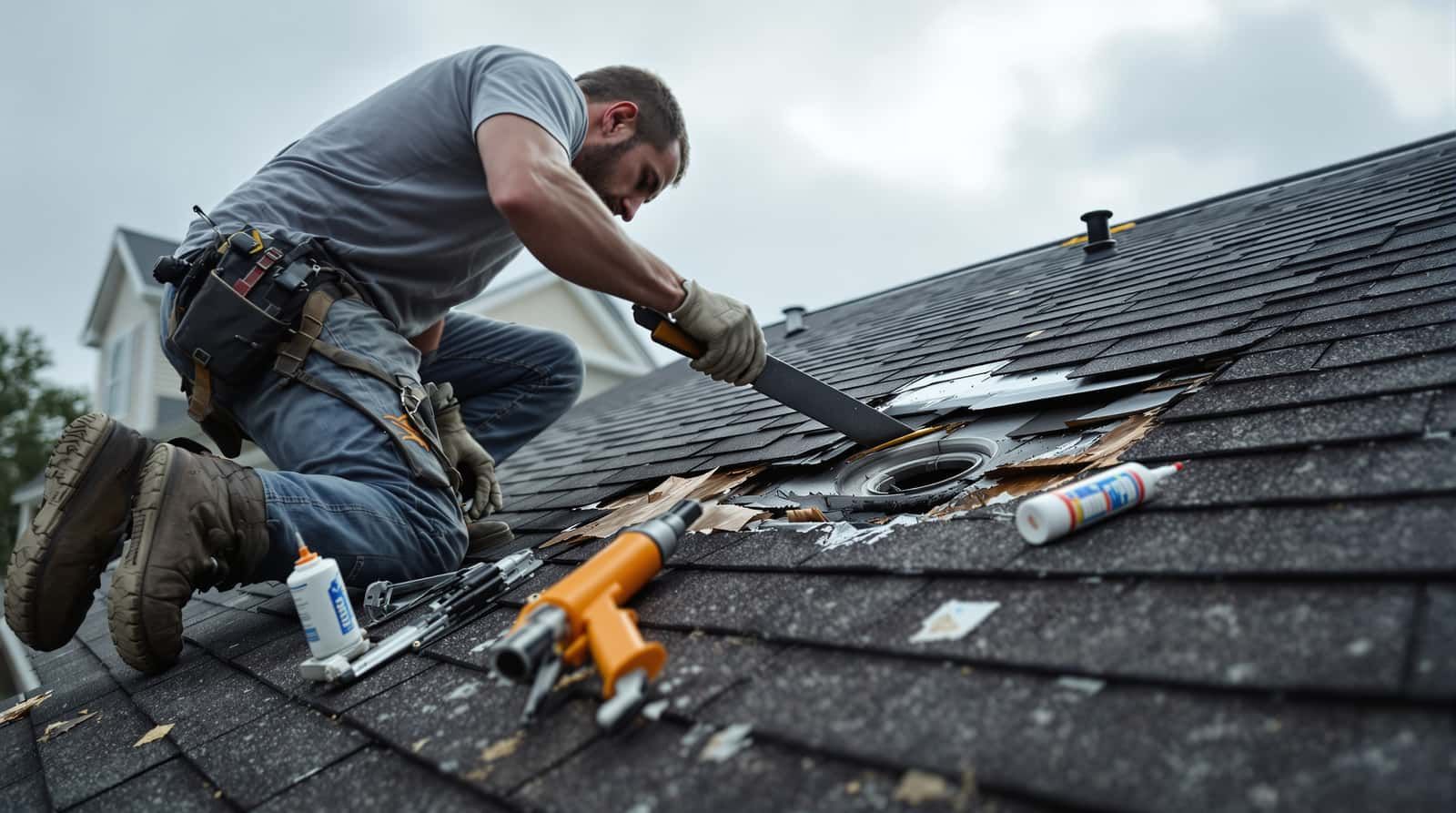
Gulf Coast roof repair requires materials and methods specific to this environment. Flashing replacement, pipe boot repair, shingle patching, and emergency leak stops — all using components rated for Mobile County's wind and humidity conditions. Call (251) 278-3357 for same-day assessment.
Roof Repair Coverage Across Mobile County
Our Mobile metro crew handles repairs throughout Mobile County and surrounding Mobile County communities. Regular service areas include Tillmans Corner, Theodore, Semmes, Eight Mile, Grand Bay, and we serve neighboring cities including Mobile, Theodore, Tillmans Corner, Semmes, Eight Mile. For our full Mobile roofing coverage area and all services available, see our Mobile roofing services.
- Tillmans Corner
- Theodore
- Semmes
- Eight Mile
- Grand Bay
- Mobile area
- Theodore area
- Tillmans Corner area
Roof Repair FAQs for Mobile County, Alabama
Yes. We repair roofs countywide, including Theodore, Semmes, Saraland, Chickasaw, Satsuma, Tillmans Corner, Prichard, Eight Mile, Grand Bay, and Citronelle, plus the unincorporated areas in between. Wherever you are, our first job is the same: trace the water back to the actual leak source and fix that. Call (251) 278-3357 to schedule a diagnostic.
The cause tracks the roof and the setting. Rural areas tend to have exposed-fastener metal that leaks at open seams and backed-out fastener washers, mid-century neighborhoods usually leak at tired shingle flashing details, and bay-adjacent communities like Theodore and Grand Bay see salt air corrode flashing years faster. We diagnose the specific cause at your address instead of assuming.
Very. Shingle repairs usually mean rebuilding flashing, replacing a pipe boot, or correcting a valley, while metal repairs mean matched fasteners, seam work, and careful material compatibility so a patch does not corrode against dissimilar metal. Sealant is only a secondary weather seal in both cases, never the primary fix. Using the wrong approach is exactly why a leak comes back.
Yes. When rain is coming in we get you an emergency dry-in to protect the interior, and we are upfront that it is a temporary measure until we can do the permanent repair on a dry roof. That way the water stops now and the real fix is done right later. Call (251) 278-3357 for an active leak anywhere in Mobile County.
If the deck is sound and the damage is contained, a localized repair is the honest call; if damage is widespread or the same failure keeps returning, replacement is the better value and we will say so. Our repairs carry a workmanship warranty and we are licensed and insured. For qualifying storm replacements, programs like FORTIFIED and the Strengthen Alabama Homes grant may help, and we point you to your carrier to verify.
Local Roofers Serving Mobile County, AL
Need Roof Repair in Mobile County? Call Now.
Call us first. Every hour a leak runs in a Gulf Coast home, the damage footprint expands. We dispatch same-day for active situations — call (251) 278-3357 or request your free roof inspection below and we'll reach out immediately.
Same-Day Emergency Response · Mobile County & Mobile County · Licensed & Insured