Roof Repair in Saraland, Alabama
Roof repair in Saraland that starts with finding the real leak source, not caulking the stain. Under that heavy pine canopy north of Mobile, the culprit is usually a cracked pipe boot, a wind-loosened ridge vent, or a needle-clogged valley — and we trace the water migration before we ever touch a shingle.
- Same-Day Emergency Response
- Insurance Documentation Support
- Licensed & Insured in Alabama
- Serving Mobile & Baldwin County Since 2018
Diagnosis first: we find the leak source, not the stain
The wet spot on your Saraland ceiling is almost never directly under the actual entry point. Water rides the underside of the deck, runs along rafters, and travels down truss webs before it drops, so the interior stain and the real breach can sit several feet apart.
We open every job with a diagnostic opening — a deliberate inspection up on the plane, not a guess from the driveway. We follow the water migration backward, read the staining pattern in the attic, and use moisture mapping to separate an active path from an old, dry ghost stain.
When the point of entry is genuinely uncertain, we run a controlled water test, isolating one section at a time. That confirms the recurring failure path before we spend a dollar on materials, which is the whole point of calling a real roofer instead of a handyman with a tube of sealant.
What an honest repair scope actually looks like
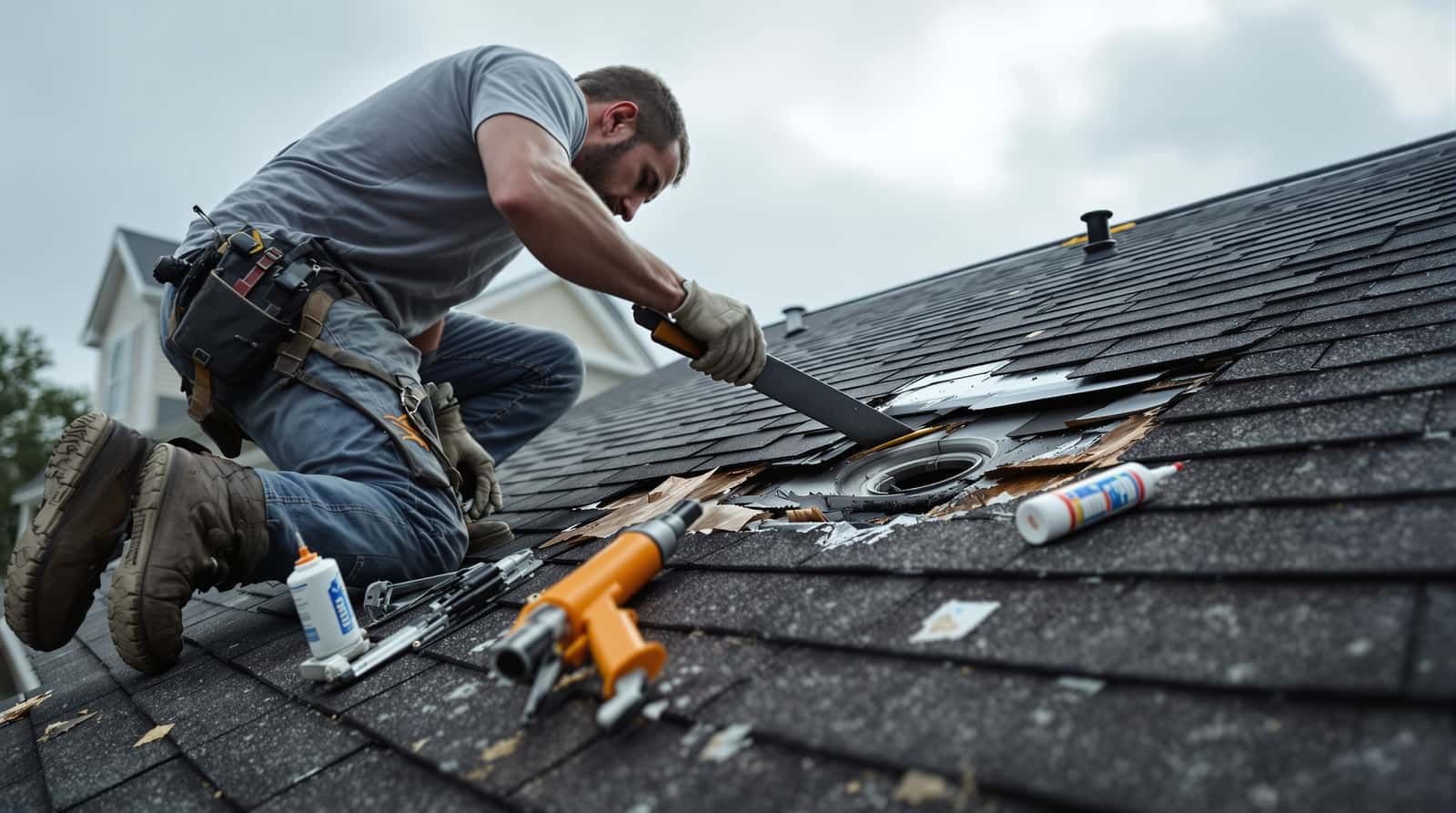
Most Saraland leaks resolve into one of a handful of real, mechanical fixes. A pipe boot replacement, a ridge-vent repair, valley clearing and relining, flashing reconstruction, or swapping a run of missing or creased shingle — each addresses a specific failure, not a general symptom.
Sealant is a secondary weather seal, never the primary repair. Caulk over a torn boot or a flashing failure buys you one dry season, then the same drip returns — usually worse, because the water kept working behind it the whole time.
Where flashing has failed, we rebuild it correctly: shingle-fashion flashing woven into the courses, a counterflashing reglet cut into masonry where a wall meets the roof, and a proper cricket or saddle behind a chimney. Material compatibility matters here — the wrong metal against the wrong underlayment is just a slower leak.
Saraland's three usual suspects: boots, ridge vents, and valleys
Cracked pipe-boot collars are the number-one call we take across Shelton Beach Rd, Kali Oka, and the Chastang area. The neoprene collar dries out under years of Gulf Coast UV and splits open right at the pipe — a dried, cracked boot collar typically shows in the 8 to 12 year range, and no amount of caulk revives it.
Wind-damaged ridge vents are the second: the vent works loose at the peak, opening a seam that lets rain drive straight into the attic. Along the US-43 and I-65 corridor those gusts get real, and a lifted ridge vent is a fast, clean localized repair once we re-seat and re-fasten it properly.
Pine-needle-clogged valleys are the third, and the pine canopy over Saraland makes them chronic. Needles dam the valley, water backs up under the shingle courses, and hydrostatic pressure plus capillary entry pushes it past the laps — the fix is to clear and reline the valley, not smear tar over the pile-up.
Emergency dry-in and the temporary-vs-permanent question
When rain is coming and the deck is open, we get you a proper emergency dry-in — a real tarp-and-fasten or a temporary membrane bridging patch that actually stops water. That is a temporary repair, and we tell you so plainly.
A temporary repair keeps the interior dry; a permanent repair fixes the mechanism. Temporary vs permanent repair is a scheduling decision, not a quality one — we come back in daylight to do the boot, the valley, or the flashing right.
The honest repair-vs-replace call
On a 1970s Saraland ranch, repairability is a real question, not a foregone conclusion. A single open seam, a puncture, or a couple of creased shingles on an otherwise sound deck is a straightforward localized repair — replacing the whole roof over that would be a waste of your money.
But when we open a chronic penetration and find wet insulation and deck damage spreading around it, the math changes. If the deck is soft, the failure path recurs across multiple areas, or old brittle-fracture shingles crumble at the touch, we will tell you a repair is a patch on a losing structure.
We have made that honest call for Saraland homeowners since 2018. We would rather do one right repair and see you in five years than sell you a replacement you did not need — or a patch that leaves you soaked again by fall.
Warranty and what to expect
Every repair we complete is warrantied, and we stand behind the seam probe and the water test that proved it dry. If a repair we performed leaks again through the same path, we come back — that is what a workmanship warranty is for.
If a covered storm caused the damage, ask your carrier about the FORTIFIED discount: roughly 35-60% off the hurricane portion and 20-35% off the other-wind portion of your premium (verify the exact figures with your insurer). Alabama's Strengthen Alabama Homes grant can also provide up to $10,000 toward a qualifying FORTIFIED roof.
Call (251) 250-2255 and we will trace the source, show you what we found, and quote the actual scope. Southern Roofing Systems is licensed and insured, and we work Saraland from the Satsuma line down through the US-43/I-65 corridor.
Targeted Roof Repair for Saraland's Climate
Gulf Coast roof repair requires materials and methods specific to this environment. Flashing replacement, pipe boot repair, shingle patching, and emergency leak stops — all using components rated for Mobile County's wind and humidity conditions. Call (251) 250-2255 for same-day assessment.
Roof Repair Coverage Across Saraland
Our Mobile metro crew handles repairs throughout Saraland and surrounding Mobile County communities. Regular service areas include Chastain Estates, Oak Ridge, Shelton Beach Estates, and we serve neighboring cities including Satsuma, Chickasaw, Mobile, Creola. For our full Saraland roofing coverage area and all services available, see our Saraland roofing services.
- Chastain Estates
- Oak Ridge
- Shelton Beach Estates
- Satsuma area
- Chickasaw area
- Mobile area
Roof Repair FAQs for Saraland, Alabama
Caulk on a cracked pipe-boot collar is a stopgap that fails within a season, because the neoprene has already dried and split from years of UV. The real repair is replacing the boot with a new collar that seats tight against the pipe. We may add sealant as a secondary weather seal, but the boot swap is the actual fix.
Almost never. A ridge vent that worked loose at the peak is a localized repair once we re-seat it, replace any cracked pieces, and re-fasten it correctly along the run. We check the seam it opened and confirm the attic is dry before we call it done.
Saraland's pine canopy drops needles that dam the valley, and backed-up water climbs under the shingle courses through capillary action and hydrostatic pressure. Sealing over the debris traps the moisture and makes it worse. We clear the valley and reline it so water runs the way it is supposed to.
It depends on what we find when we open the leak. A single failure on a sound deck is a repair worth doing, but if we uncover wet insulation, deck damage, and a failure path that recurs across the roof, a patch just delays the inevitable. We show you the evidence and let you decide with real information.
Yes. If rain is coming we get a proper dry-in on your Saraland home to stop water now, then return to complete the permanent repair in daylight. Every repair we perform is warrantied, and if the same path leaks again we come back. Call us at (251) 250-2255.
Local Roofers Serving Saraland, AL
Need Roof Repair in Saraland? Call Now.
Call us first. Every hour a leak runs in a Gulf Coast home, the damage footprint expands. We dispatch same-day for active situations — call (251) 250-2255 or request your free roof inspection below and we'll reach out immediately.
Same-Day Emergency Response · Saraland & Mobile County · Licensed & Insured