
Roof Repair in Mobile, Alabama
Roof repair in Mobile starts with finding the leak source, not chasing the stain. Southern Roofing Systems traces where water actually enters, isolates the failure, and rebuilds it the right way across historic downtown, West Mobile, and the riverside neighborhoods.
- Same-Day Emergency Response
- Insurance Documentation Support
- Licensed & Insured in Alabama
- Serving Mobile & Baldwin County Since 2018
Diagnosis First: We Find the Leak Source, Not the Stain
Every repair opens with a diagnostic opening, not a bucket of sealant. A ceiling stain in a Mobile home marks where water finally dripped, but water migration means the true leak source can sit fifteen feet uproof. We work attic-first, following the wet path back to where it started.
Moisture mapping tells us how far the water traveled along the deck. We read stained framing, trace the drip line, and check for wet insulation that hides an active leak. When the entry point is ambiguous, a controlled water test confirms it before we commit to a scope.
Getting the diagnosis right is the whole job. A misread leak becomes a recurring failure path that reappears with the next Gulf downpour. Call (251) 250-2255 and we start with the question that matters: where is the water actually getting in?
Real Repair Scopes: Rebuild the Failure, Not Just Coat It
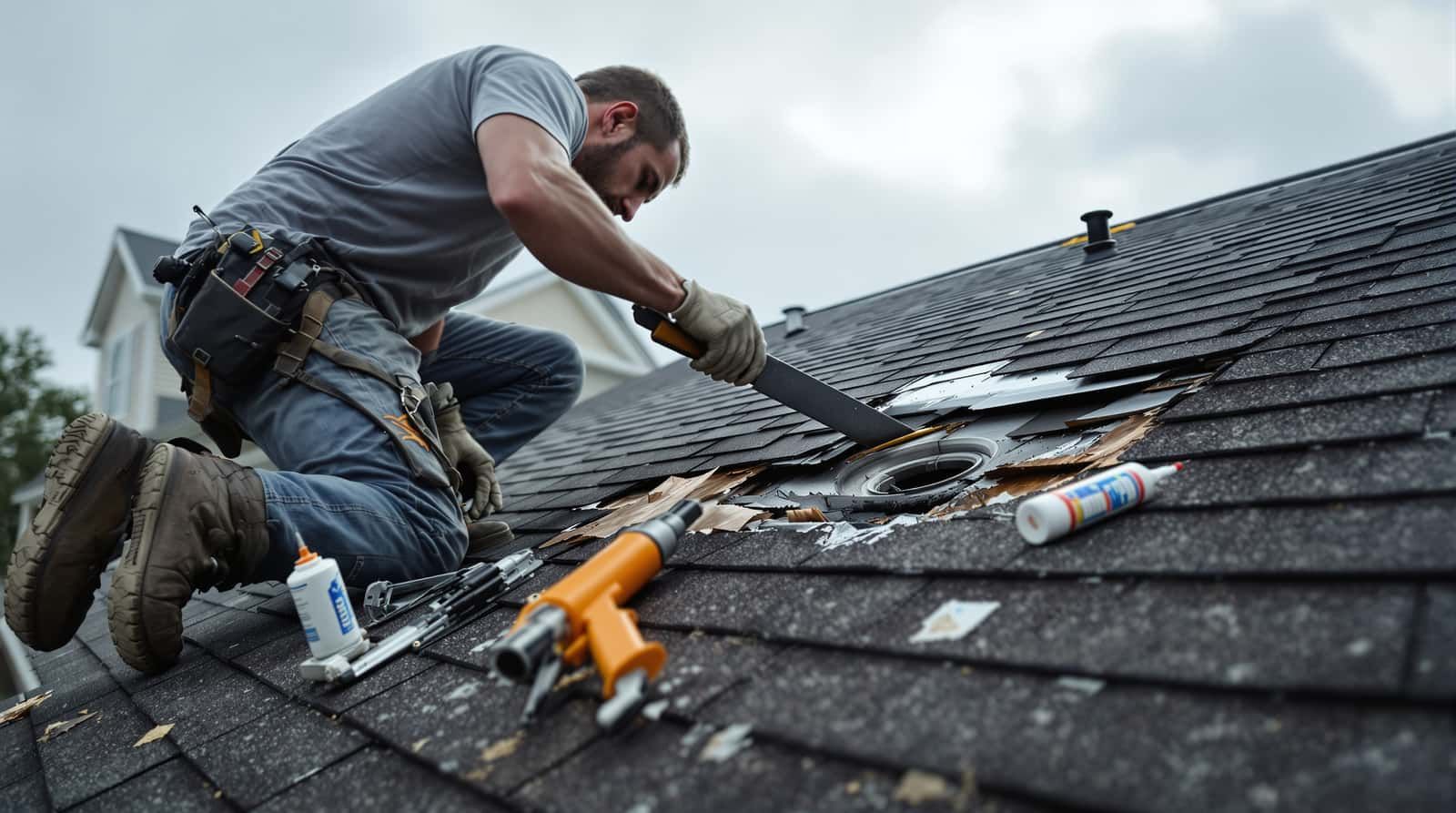
Most Mobile leaks are a flashing failure, and flashing gets rebuilt, not smeared. That means shingle-fashion flashing woven back into the field, step and counterflashing tucked into a proper reglet, a fresh pipe boot, or reworked valley metal. Sealant is a secondary weather seal at a termination, never the primary fix.
Field repairs handle the missing, creased, or wind-lifted shingle. We replace damaged courses, seal a puncture correctly, and match material compatibility so the patch bonds instead of fishmouthing loose. Repairability comes down to whether the surrounding shingles are still pliable enough to lift and reseat without brittle fracture.
Low-slope sections get a membrane-grade repair. Open seams are cleaned and rewelded or bonded with EPDM primer and seam tape, a lifting termination bar is refastened, and membrane bridging is cut back so the patch lies flat. A seam probe verifies the cold weld actually holds before we leave.
Mobile Leaks by District
Historic downtown throws the hardest diagnostics. In Oakleigh, Old Dauphin Way, and Midtown, century-old chimneys leak where counterflashing has pulled from a crumbling masonry reglet, and ornate rooflines hide complex and dead valleys with reverse laps. A downtown ceiling stain is frequently a flashing failure well away from the visible drip.
Mid-century West Mobile is a shingle story. Aging three-tab roofs shed and crease under wind, and sun-baked tabs reach brittle fracture where a light seal-down would once have worked. Repairs here mean replacing lifted courses and reestablishing the wind seal.
Riverside and Dog River fight corrosion; the CBD fights seams. Salt air eats valley metal and flashing along the water, so we check whether the metal has service life left before we reflash it. Downtown commercial low-slope roofs leak at open seams and where a cricket or saddle behind a wall was never built to shed water.
Emergency Dry-In: Temporary Now, Permanent When It's Dry
When water is coming in, we stop it first. An emergency dry-in gets a controlled cover over the entry point so hydrostatic pressure and capillary entry stop pushing water into your ceiling. That is the temporary repair, and we say so plainly.
The permanent repair follows once we can work a dry roof. Temporary versus permanent repair matters because a tarp buys time but does not rebuild the flashing or reseat the shingles. We schedule the real fix and tell you exactly what it involves.
Repair vs. Replace: An Honest Read
A localized failure deserves a localized repair. One bad valley, a single pipe boot, or an isolated flashing detail is a defensible repair, and we will not sell you a roof you do not need. If the deck is sound and the surrounding field has life left, we fix the spot that failed.
Distributed failure is a different conversation. When leaks show up along multiple slopes, the shingles fracture at a touch, or we find widespread deck damage and saturated insulation, patching just chases the next leak. In that case we show you the evidence and explain why replacement is the sounder call.
Warranty and What to Expect
We have worked Mobile and Baldwin County roofs since 2018, licensed and insured. You get a written scope, a workmanship warranty on the repair, and photos of the failure we found and the work we did. No vague promises, no mystery line items.
Expect a straight answer at every step. We confirm the leak source, walk you through the repair, and tell you honestly whether it is a lasting fix or a stopgap on a roof nearing the end. Call (251) 250-2255 to get on the schedule.
Targeted Roof Repair for Mobile's Climate
Gulf Coast roof repair requires materials and methods specific to this environment. Flashing replacement, pipe boot repair, shingle patching, and emergency leak stops — all using components rated for Mobile County's wind and humidity conditions. Call (251) 250-2255 for same-day assessment.
Roof Repair Coverage Across Mobile
Our Mobile metro crew handles repairs throughout Mobile and surrounding Mobile County communities. Regular service areas include Midtown, Oakleigh, Spring Hill, Llanfair, Skyline, and we serve neighboring cities including Prichard, Saraland, Theodore, Spanish Fort. For our full Mobile roofing coverage area and all services available, see our Mobile roofing services.
- Midtown
- Oakleigh
- Spring Hill
- Llanfair
- Skyline
- Prichard area
- Saraland area
- Theodore area
Roof Repair FAQs for Mobile, Alabama
We work attic-first, tracing water migration back along the deck from the drip to the real entry point, since a downtown ceiling stain is often a flashing failure fifteen feet away. Moisture mapping shows us how far the water traveled, and a controlled water test confirms the source before we quote a repair. The goal is to fix the cause, not just cover the stain.
If the failure is localized, one bad valley, a pipe boot, or an isolated flashing detail, and the deck is sound, a localized repair is the honest and cost-effective choice. When leaks appear across multiple slopes, the shingles reach brittle fracture, or we find widespread deck damage and wet insulation, patching just chases the next leak and replacement is the better call. We show you photos of what we find so you can decide with real evidence.
Usually yes. In Oakleigh, Old Dauphin Way, and Midtown, most chimney leaks are counterflashing that has pulled from a deteriorated masonry reglet, or a complex valley alongside it. We rebuild the flashing and cut a fresh reglet rather than relying on sealant, which is only a secondary weather seal and never the primary fix.
Yes. We provide an emergency dry-in to stop water at the entry point as a temporary repair, then schedule the permanent fix once the roof is dry enough to work safely. We are always clear about which is which so you know what a tarp does and does not solve. Call (251) 250-2255 for emergency response.
You get a written scope, a workmanship warranty on the repair itself, and before-and-after photos of the failure we found and the work we performed. Southern Roofing Systems has served Mobile and Baldwin County since 2018, licensed and insured. We also tell you honestly whether the repair is a durable fix or a stopgap on a roof nearing the end of its service life.
Local Roofers Serving Mobile, AL
Need Roof Repair in Mobile? Call Now.
Call us first. Every hour a leak runs in a Gulf Coast home, the damage footprint expands. We dispatch same-day for active situations — call (251) 250-2255 or request your free roof inspection below and we'll reach out immediately.
Same-Day Emergency Response · Mobile & Mobile County · Licensed & Insured