Choosing the metal system for a Fairhope roof
Standing seam is the profile most Fairhope homeowners are picturing. It hides its clips and fasteners under a raised panel seam, so nothing penetrates the flat of the panel where bay-driven rain sits. That concealed-fastener design is why standing seam suits both new bluff builds and 1920s cottages downtown.
Exposed-fastener panels are the value alternative, and they are honest work when detailed right. R-panel/PBR and the 5V-crimp are screwed straight through the panel face, which is faster and cheaper but puts hundreds of gasketed fasteners in the weather. On the Fairhope bluff those gaskets and screws become the maintenance item long before the steel does.
The metallurgy call for bay-bluff salt air
Fairhope sits on a bluff over Mobile Bay, so salt exposure is real but not the max-salt open Gulf front. A coastal-rated coated steel or aluminum are both legitimate here; the closer a home sits to the bay or Point Clear waterfront, the stronger the case for aluminum, which does not red-rust at a cut edge. We match substrate to your exact proximity rather than selling one metal to every address.
The coating is what carries the finish warranty, and PVDF (Kynar 500) outperforms SMP in salt. PVDF holds its chalk/fade retention far longer than an SMP paint, which matters on a bright downtown color under coastal UV. On a Galvalume or galvanized steel panel, we specify an appropriate AZ50/AZ55 coating weight underneath the paint and a panel gauge heavy enough to resist oil canning across the span.
Read the coastal warranty exclusions before you fall in love with a number. Most finish warranties shrink or void within a stated distance of saltwater and always exclude cut-edge corrosion and improper fastener selection. We size those terms to your address, since "since 2018" we have watched which coastal exclusions actually bite on Baldwin County jobs.
Install details that decide whether a coastal roof lasts
Standing seam moves, and the clips are what let it move without tearing. We set fixed and sliding clips per the panel run so thermal expansion is absorbed rather than fought, with clip spacing tightened in the uplift-critical zones along the bluff. A panel that cannot move telegraphs as oil canning and eventually loosens at the fastener pullout points.
The seam type is a durability decision, not a style one. A snap-lock panel clicks together for a clean, faster install; a mechanically seamed panel is rolled into a single-lock or, for the most weather-critical bluff exposures, a double-lock that grips the panel seam tight against wind-driven rain. Closures and butyl tape seal the endlap and terminations where the panel meets the wall and ridge.
Coastal detailing lives in the parts nobody photographs. We run a high-temperature underlayment under metal because attic temps cook a standard synthetic, protect every cut edge and clear the swarf (steel filings) that flash-rusts into white rust and red rust on a panel. Where aluminum meets steel flashing or fasteners we isolate the galvanic couple so a dissimilar-metal reaction does not eat the connection.
The Fairhope reality: historic review and bluff salt
Downtown Fairhope, the Fruit & Nut District, and the historic cottages can fall under architectural review. That board may govern the profile, color, and finish you are allowed to install, so a period-appropriate standing-seam profile in a reviewed color often clears where a bold panel would not. We build to the approvable spec instead of installing first and arguing later.
The bluff and bay salt air punishes the wrong fastener fast. Non-stainless fasteners corrode in the bluff salt air within a few years, streaking rust down the panel long before the coating fails, and bare cut edges red-rust without protection. We use stainless or corrosion-resistant fasteners and treat coating care and edge protection as the job, not an upsell.
Wind uplift and FORTIFIED on the Baldwin County coast
Baldwin County wind loads are why the assembly matters more than the panel brand. We install to a tested assembly (think UL 580 / FM 4474) rather than treating any single component as a blanket approval, because coastal wind uplift acts on the whole clip-panel-deck system. Tighter clip spacing and a mechanically seamed lock at the perimeter are how a metal roof earns its coastal wind rating.
A FORTIFIED Roof designation can move your insurance, and Alabama backs it with grant dollars. Alabama carriers commonly discount 35-60% off the hurricane portion of the premium and 20-35% off the other-wind portion, but you verify the exact credit with your carrier. The Strengthen Alabama Homes grant reimburses up to $10,000 toward a FORTIFIED Roof, and we install the sealed-deck and edge details that certification requires.
Warranty and what to expect
You are buying two different warranties, and they are not the same promise. The manufacturer's PVDF finish warranty covers chalk, fade, and film integrity on its own terms, while our workmanship warranty covers the clips, seams, closures, and flashings we install. Neither one is a lifespan guarantee, and any honest coastal roofer will point you to the salt-distance and cut-edge exclusions in writing.
Expect a straight measurement, a substrate and coating recommendation tied to your bay proximity, and a documented spec. We handle historic-district submittals where they apply and detail the roof for salt, thermal movement, and wind before the first panel goes up. Call Southern Roofing Systems at (251) 280-1671 to start with an inspection rather than a guess.
The Real Longevity Picture for a Fairhope Metal Roof
You will see metal roofing cited around 40–60 years and asphalt shingles near 15–25 — sensible industry averages, but not a guarantee, and not measured on the Fairhope bluff. Bluff and bay salt corrodes non-stainless fasteners and can trigger the coastal exclusions in coating warranties, so a downtown historic cottage or a bayfront home will not necessarily hit the brochure figure. Real service life comes down to the coating, corrosion-resistant fasteners, and how the roof is detailed — not a number on a spec sheet.
Standing Seam Metal Roofing in Fairhope
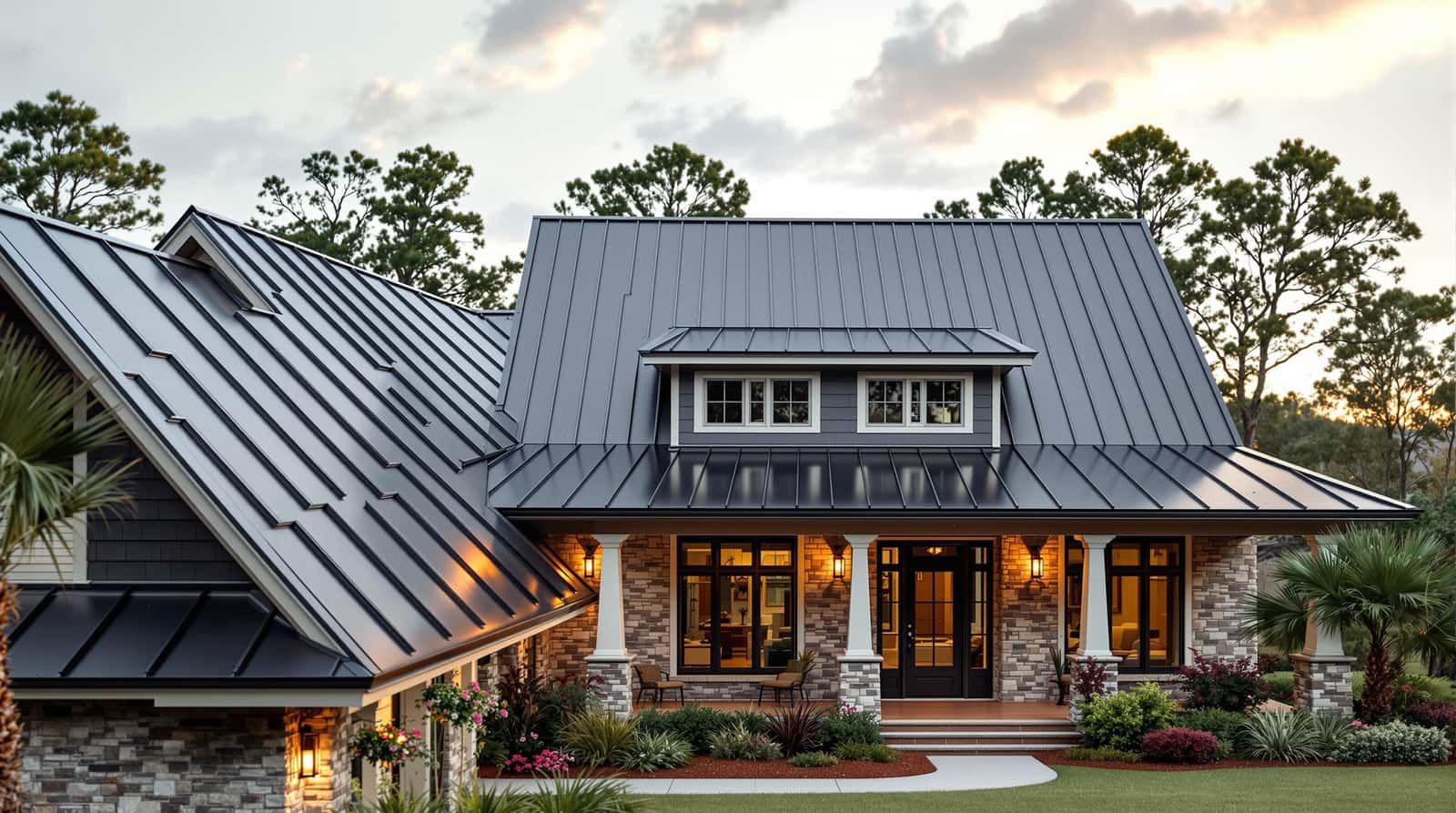
Metal roofing in Fairhope requires coastal-grade specifications. Aluminum substrate with Kynar 500 PVDF coating and stainless steel concealed clips — no galvanized, no Galvalume within the salt zone. Call (251) 280-1671 for a free metal roofing consultation.
Metal Roofing Installation Across Fairhope
We install metal roofing throughout Fairhope and Baldwin County. Neighborhoods and communities served include Fruit & Nut District, Point Clear, Rock Creek, Castleberry. We also serve Daphne, Point Clear, Foley and surrounding areas. For a complete view of our Fairhope roofing coverage area and all residential services, see our city page.
- Fruit & Nut District
- Point Clear
- Rock Creek
- Castleberry
- Daphne area
- Point Clear area
- Foley area
Metal Roofing FAQs for Fairhope Homeowners
You will see metal roofing cited around 40 to 60 years and asphalt shingles near 15 to 25 — reasonable industry averages, but not a promise, and not measured on the Fairhope bluff. Bluff and bay salt corrodes non-stainless fasteners and can trigger coastal coating warranty exclusions, so real-world life varies. The honest answer depends on the coating, corrosion-resistant fasteners, and detailing rather than a spec-sheet number.
Often yes, but homes in the downtown historic district and Fruit and Nut District can fall under architectural review that governs profile, color, and finish. A period-appropriate standing-seam profile in an approved color usually clears where a bold panel would be rejected. We build to the approvable spec and handle the submittal where it applies.
Standing seam hides its clips and fasteners under the panel seam, which keeps penetrations out of the flat where bay rain sits, and it fits both bluff builds and historic cottages. Exposed-fastener R-panel and 5V-crimp cost less but put gasketed screws in the weather that become the maintenance item on the salt-air bluff. For most Fairhope roofs near the bay we steer toward standing seam.
The panel coating handles salt reasonably well, but the fasteners and cut edges are the real risk on the bluff. Non-stainless fasteners corrode within a few years and bare cut edges red-rust without protection, so we use stainless or corrosion-resistant fasteners and protect every edge. Aluminum near the bay avoids cut-edge rust entirely and is worth considering the closer you sit to the water.
PVDF, sold as Kynar 500, holds its color and gloss far longer than an SMP paint under coastal UV and salt, which matters on a bright Fairhope color. SMP costs less but chalks and fades sooner near the bay. Either way, read the warranty exclusions, because coastal finish warranties shrink within a stated distance of saltwater and always exclude cut-edge corrosion.
Cost depends on the substrate, coating, profile, and roof complexity, so we price after an inspection rather than over the phone. A FORTIFIED Roof designation can earn Alabama insurance credits, commonly 35-60% off the hurricane portion and 20-35% off the other-wind portion, though you verify the exact number with your carrier. The Strengthen Alabama Homes grant reimburses up to 10,000 dollars toward a FORTIFIED Roof, and we install the details it requires.
Fairhope Metal Roofing Contractors — Serving Your Area
Get a Free Metal Roofing Consultation in Fairhope
We've been installing standing seam metal on Gulf Coast homes since 2018. The conversation starts with a free roof inspection and honest assessment — what makes sense for your home, your timeline, and your insurance situation. Call (251) 280-1671 or request a consultation below.
Fairhope & Baldwin County · Licensed & Insured · Gulf Coast Roofers Since 2018