PVC Roofing in Mobile & Baldwin County, Alabama
Looking for PVC roofing in Mobile or Baldwin County? The only commercial membrane that resists oils, greases, and chemical exposure. The right spec for restaurants, food service, industrial, and commercial kitchens. Heat-welded seams, fire-rated, and the strongest single-ply for puncture resistance.
- Chemical & Grease Resistant
- Heat-Welded Seams
- Fire-Rated
- Highest Puncture Resistance
What's Going On With Your Roof?
Free inspections • Same-day response • No obligation
No obligation · Licensed & insured · Same-day response
PVC Roofing Protects Gulf Coast Restaurants and Industrial Properties from Chemical Damage
TPO and EPDM degrade when exposed to oils, greases, and chemical solvents. As a licensed and insured roofing contractor serving Mobile County and Baldwin County, we've seen this firsthand — restaurant exhaust systems, commercial kitchen hoods, industrial ventilation, and food processing facilities all discharge grease-laden air onto the roof surface. Over time, these oils penetrate TPO and EPDM membranes, breaking down the polymer structure and causing premature deterioration at the precise areas where the exposure is concentrated — around exhaust vents and curbs. A TPO or EPDM roof on a restaurant that's otherwise in excellent condition can develop serious deterioration in a localized area within 5–7 years simply from grease exhaust contact.
PVC is chemically resistant to the oils, greases, and solvents that degrade competing membranes. This chemical resistance is intrinsic to the PVC polymer — it's not a coating or surface treatment that can wear off. For buildings where rooftop chemical exposure is part of normal operations, PVC is the only membrane that maintains its structural integrity over the full expected service life.
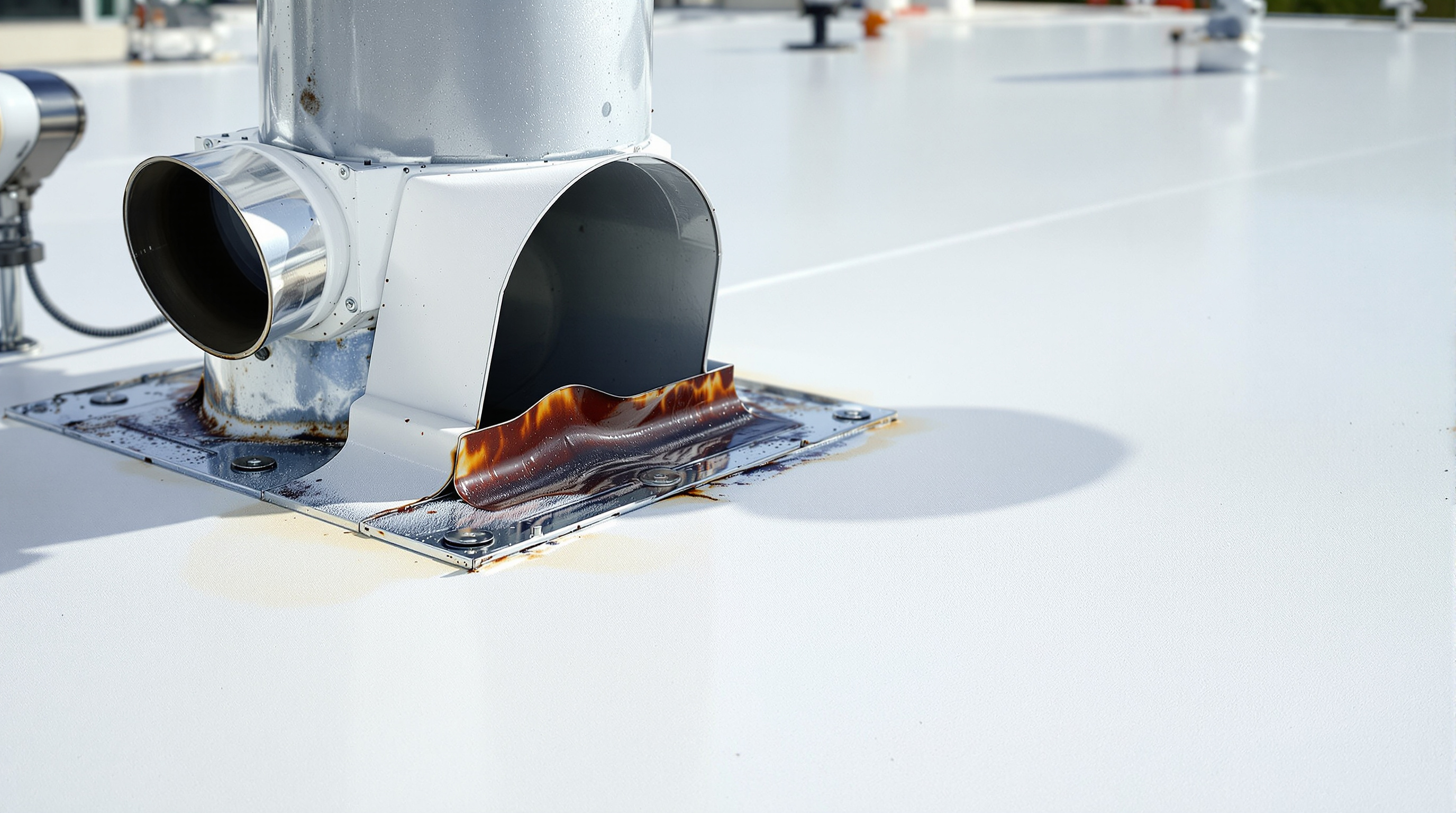
Beyond chemical resistance, PVC offers the highest puncture resistance of any single-ply membrane. This matters for commercial roofs with heavy foot traffic from HVAC technicians, plumbers, and other service trades that access the roof regularly. A 60-mil PVC membrane is meaningfully harder to puncture accidentally than equivalent TPO or EPDM, which reduces the number of small repairs from rooftop service activity.
PVC is also fire-rated to UL Class A — the highest rating — when installed with the correct substrate. For commercial buildings where fire rating of the roof assembly is a code or insurance requirement, PVC meets that requirement without additional membrane layers.
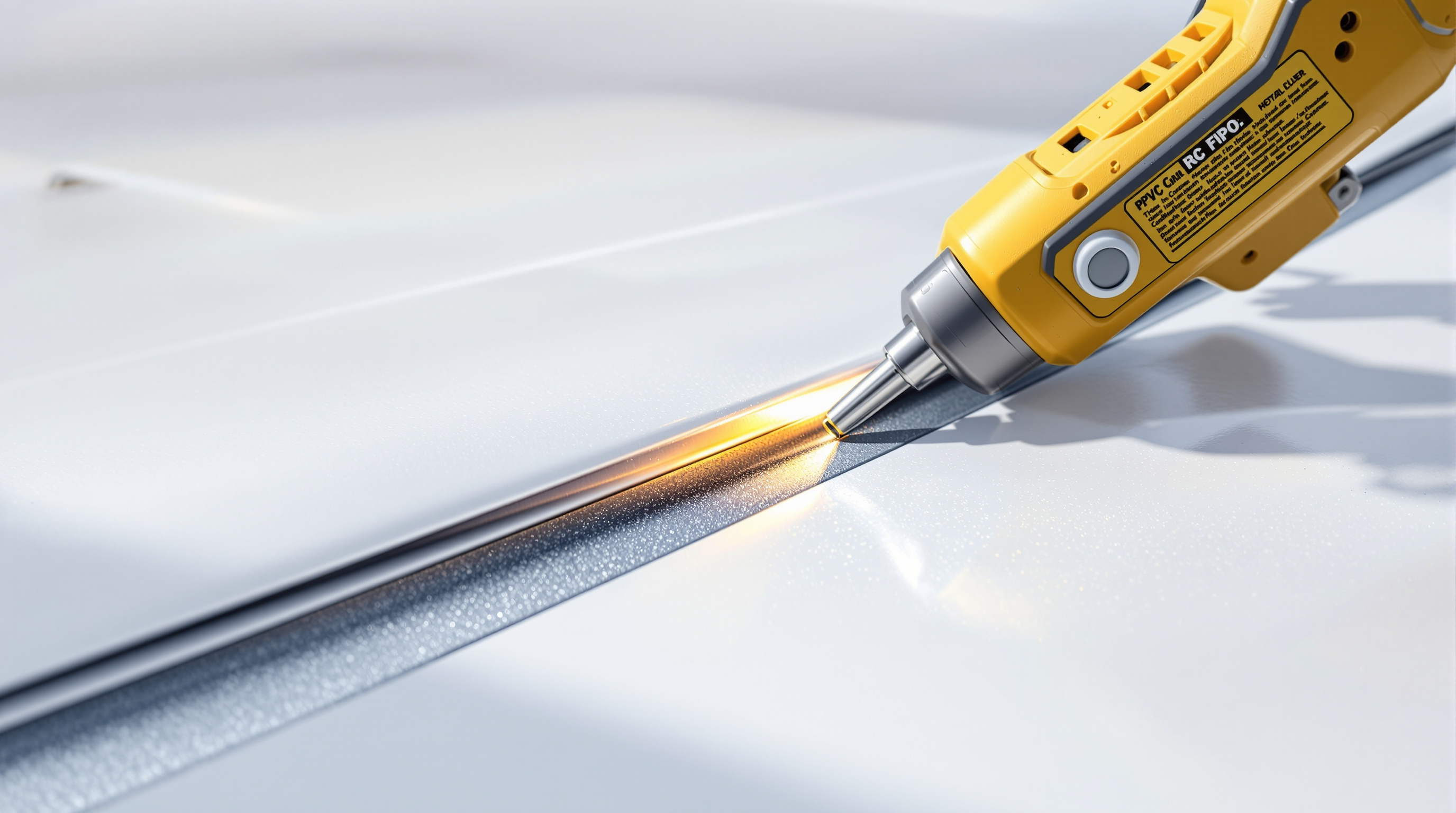
Like TPO, PVC uses heat-welded seams — the strongest seam method available. The weld creates a homogeneous bond across the full weld width that is stronger than the membrane material itself. PVC seam quality is verified the same way as TPO: our roofers probe every seam at completion before any equipment leaves the roof. Contact us for a free roof inspection to determine if PVC is the right roofing services specification for your commercial property.
Commercial Building Types That Require PVC Roofing in South Alabama
The primary application driver is chemical exposure. If your building has any of the following, PVC should be the first membrane specification considered:
- Restaurants and food service: Any commercial kitchen with rooftop exhaust. Grease deposits on TPO and EPDM cause deterioration within years of contact. PVC resists grease chemically.
- Food processing facilities: Processing operations with outdoor ventilation carrying oils, fats, or cleaning chemical residue.
- Industrial manufacturing: Buildings where solvent, oil, or chemical exhaust contacts the roof surface through ventilation systems.
- Commercial laundries: Chemical-laden steam exhaust from industrial laundry equipment.
- Auto service facilities: Solvent and petroleum exhaust from vehicle service ventilation.
- High foot-traffic commercial roofs: Any roof with frequent mechanical, HVAC, or telecommunications service access benefits from PVC's superior puncture resistance.
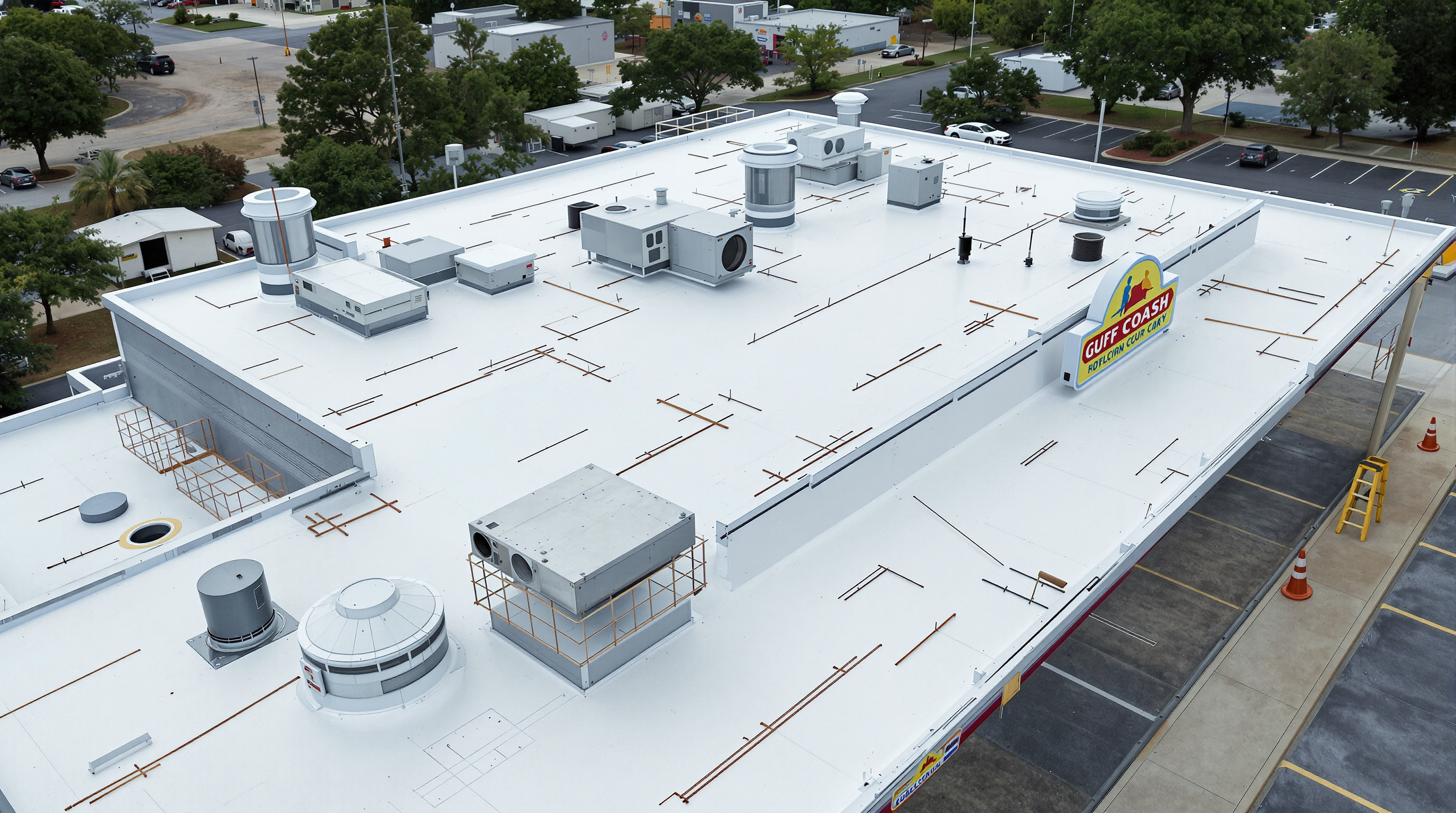
For buildings without chemical exposure, TPO is typically the better choice — lower upfront cost ($7.00–$10.50/sq ft for PVC vs. $6.50–$9.50/sq ft for TPO) with equivalent seam quality and similar service life. PVC's cost premium is justified specifically by chemical resistance; there's no performance benefit for standard commercial buildings without that exposure. As a Gulf Coast roofing company that installs all three membrane types, we'll tell you which system actually fits your building — not just the most expensive option.
PVC Roof Installation — What to Expect
PVC installation follows the same rigorous sequence we use for all single-ply commercial systems, with specific considerations for chemical-exposed buildings. Restaurants, food processing facilities, and industrial buildings with rooftop exhaust require careful attention to membrane routing around exhaust penetrations — the areas where PVC's chemical resistance provides the most value.
- 1
Pre-Installation Survey and Chemical Exposure Mapping
We survey the entire roof surface, documenting every penetration, exhaust vent, grease hood discharge, and chemical exhaust location. For restaurants and food service buildings, we map grease exhaust patterns to understand where chemical exposure is concentrated — this drives membrane routing and detail placement. Wind uplift calculations, drainage assessment, and insulation moisture evaluation are completed before the project scope is finalized.
- 2
Tear-Off, Deck Repair, and Insulation
Existing membrane is removed completely. On restaurant and food service buildings, the existing membrane around exhaust vents often shows the characteristic grease-degraded surface that prompted the PVC specification — we document this condition for your records. Damaged deck sections are replaced. Polyisocyanurate insulation is installed with tapered sections for positive drainage, fastened at wind zone-specific densities.
- 3
PVC Membrane Installation and Heat Welding
60-mil PVC membrane is positioned with proper overlap at all seams. Every seam is heat-welded using calibrated hot-air equipment — PVC welds at different temperature settings than TPO, and our crews are trained on both systems separately. PVC's weld quality is slightly different to probe-test than TPO due to the material's different flexibility characteristics, and we verify every weld meets the manufacturer's pull-test standard.
- 4
Exhaust Penetration Detailing and Edge Metal
Grease exhaust hoods, kitchen ventilation curbs, and industrial exhaust penetrations receive PVC-specific flashing details welded directly into the field membrane. These details are the most critical area on a chemical-exposed roof — they're where degradation begins on non-PVC systems. Edge metal is installed to ANSI/SPRI ES-1 for the building's wind zone. All penetration details, parapet terminations, and drain fittings are heat-welded with no reliance on adhesive or caulk.
- 5
Quality Verification and Warranty Registration
Every seam is probed for weld integrity. Penetration flashings around exhaust vents receive additional inspection given their exposure environment. The completed installation is photographed and documented. Manufacturer warranty is registered — most PVC manufacturers offer 15-20 year systems warranties on 60-mil installations with registered accessories. You receive complete warranty documentation and a maintenance schedule specific to your building's chemical exposure profile.
PVC vs. TPO for Gulf Coast Commercial Buildings
The decision between PVC and TPO comes down to one question: does your building have chemical exposure on the roof? Both systems use heat-welded seams. Both achieve Wind Zone III compliance. Both offer white reflective surfaces with similar energy performance. Both deliver 20-25 year service life in Gulf Coast conditions. The meaningful difference is chemical resistance — and that difference is absolute, not marginal.
PVC resists oils, greases, and chemical solvents that degrade TPO within years of contact. Restaurant grease exhaust, industrial solvent ventilation, commercial kitchen hood discharge, and petroleum-based chemical exposure all attack TPO's polymer structure. PVC is chemically inert to these substances. If your building has any of these exposures, PVC is the correct specification regardless of cost. If your building does not have these exposures, TPO delivers equivalent performance at $0.50-$1.00/sq ft less installed cost.
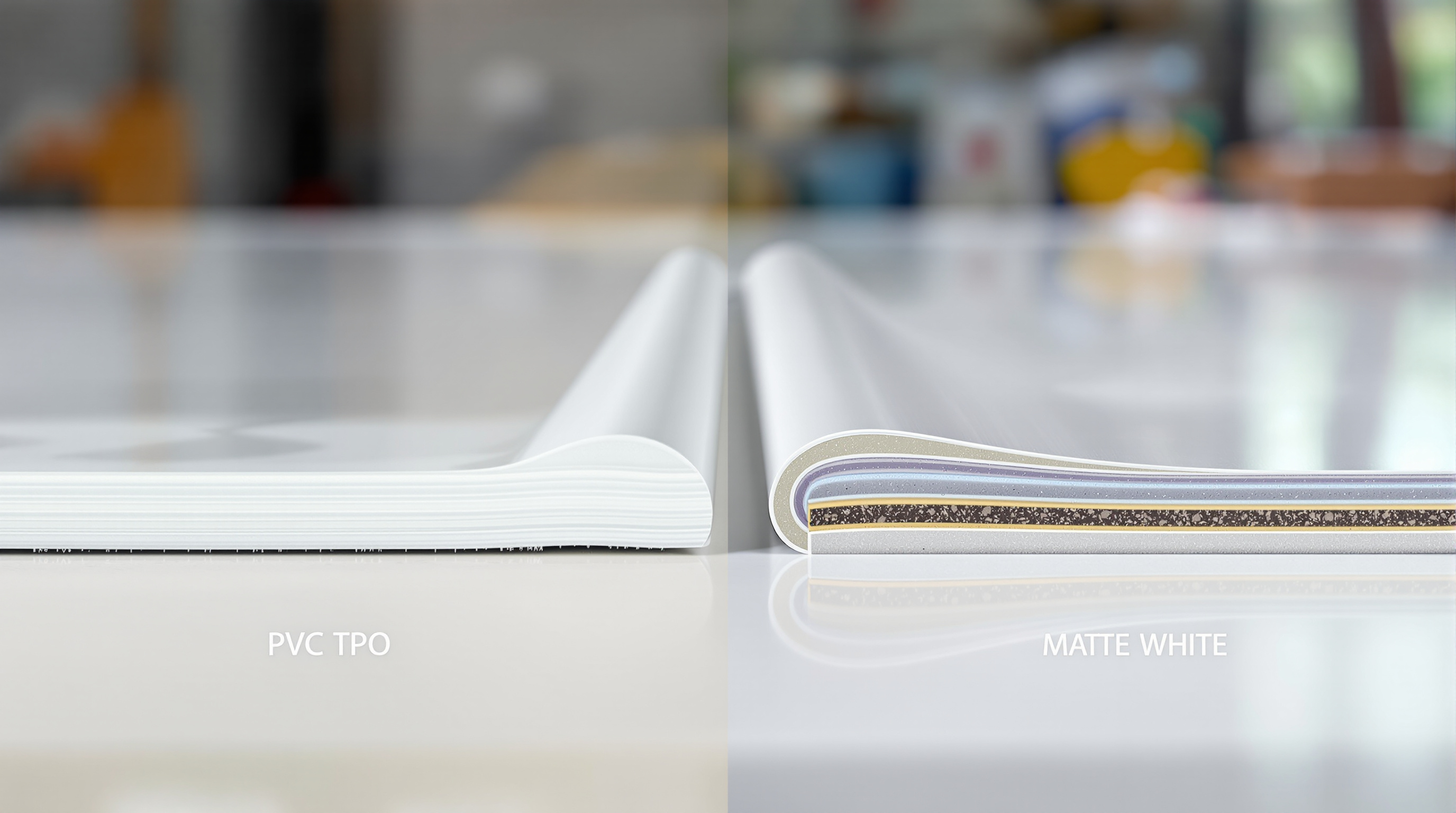
Weld strength is marginally different between the two systems. PVC welds tend to be slightly stronger than TPO welds in destructive peel testing — PVC has been a heat-welded system since its introduction, while TPO formulations have been refined over time to improve weld consistency. In practical terms, both systems produce seams stronger than the field membrane when welded by experienced crews with calibrated equipment. The weld strength difference is real but not a primary decision driver for most buildings.
Lifespan comparison in Gulf Coast conditions is essentially equal for non-chemical applications. 60-mil PVC and 60-mil TPO both deliver 20-25 years in our UV and thermal environment when properly installed with adequate drainage. PVC's advantage appears specifically in chemical-exposed environments, where TPO's service life can be cut to 8-12 years while PVC maintains its full 20-25 year performance. The cost premium for PVC — roughly $5,000-$10,000 on a 10,000 sq ft building — is justified entirely by that chemical resistance benefit.
- Chemical and grease resistant
- Heat-welded seams
- UL Class A fire rating
- Highest puncture resistance
- Wind Zone III compliant
- 20–25 year service life
- White reflective surface
- Ideal for restaurants and industrial
PVC Roofing Engineered for Alabama's 140–160 mph Wind Zones
PVC roofing in Mobile County and Baldwin County must be specified and installed to ASCE 7-16 Wind Zone III requirements — 140–160 mph design wind speeds. The fastening density for insulation board and attachment method for the membrane are calculated for each specific building location, height, and exposure category. PVC's fully adhered attachment distributes uplift forces across the bonded membrane area, making it an appropriate system for hurricane-force wind zones.
Edge metal specification is critical for Gulf Coast PVC installations. ANSI/SPRI ES-1 edge metal is required at all roof perimeters and is the most common failure point in high-wind commercial roof systems. Our roofing contractors specify and install code-compliant edge metal on every PVC project, designed for the specific wind zone parameters at the building site.
PVC Roofing Questions from Gulf Coast Commercial Property Owners
60-mil PVC fully installed: $7.00–$10.50 per square foot. This includes tear-off, polyiso insulation board, PVC membrane, edge metal, and all penetration details. PVC costs $0.50–$1.00/sq ft more than equivalent TPO — justified for chemical-exposed applications, less justified for standard commercial buildings without that exposure. Written per-square-foot estimates provided with full line-item breakdown.
No. PVC is the correct specification for chemical-exposed commercial buildings — restaurants, food processing, industrial facilities with solvent exhaust, and high-traffic roofs. For standard commercial buildings without chemical exposure, TPO is a comparable performer at lower cost. The decision driver is chemical exposure, not a general performance hierarchy between the systems.
60-mil PVC: 20–25 years in Gulf Coast conditions with proper drainage and maintenance. PVC's service life in chemical-exposed applications significantly exceeds what TPO or EPDM would achieve in the same environment — which is the entire point of the specification.
Yes. PVC membrane installed with the correct substrate assembly achieves UL Class A fire rating — the highest classification. For commercial buildings where the roof assembly fire rating is a code or insurance requirement, PVC meets that requirement without additional layers. TPO and EPDM also achieve Class A rating in specific assembly configurations — consult the project specification for the specific system being considered.
Get Your Free Roof Inspection
We'll assess your roof's condition and provide a detailed report — no cost, no obligation.
- Thorough roof inspection
- Detailed written report
- Same-day scheduling available
- Licensed & insured across Mobile & Baldwin County
What's Going On With Your Roof?
Free inspections • Same-day response • No obligation
No obligation · Licensed & insured · Same-day response